John Behm
Engineering Portfolio
Hi! I'm John. I hold an M.S. in Aerospace Engineering from the University of Colorado, and a B.S. in Engineering Science from Colorado State University. I love learning how things work, so that I can make things that work. Please take a look at some of my projects.
Museum Exhibits
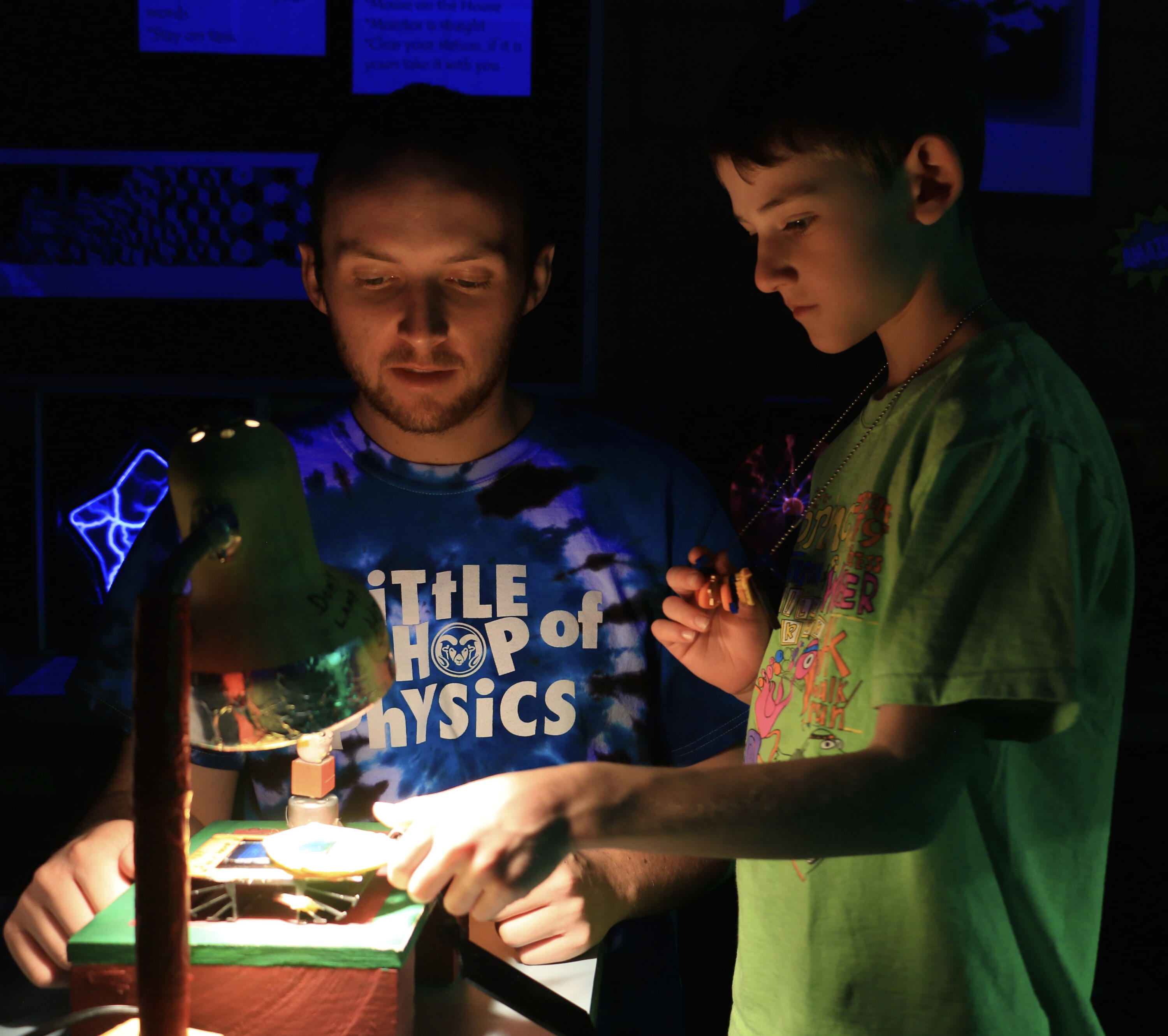
I've been volunteering at the Fort Collins Museum of Discovery since 2024, and recently began working on refreshing and expanding some of the exhibits, with the goals of increasing reliability and improving guest experiences. I am collaborating with another volunteer named Mark Wanger to design and implement new and improved exhibit features.
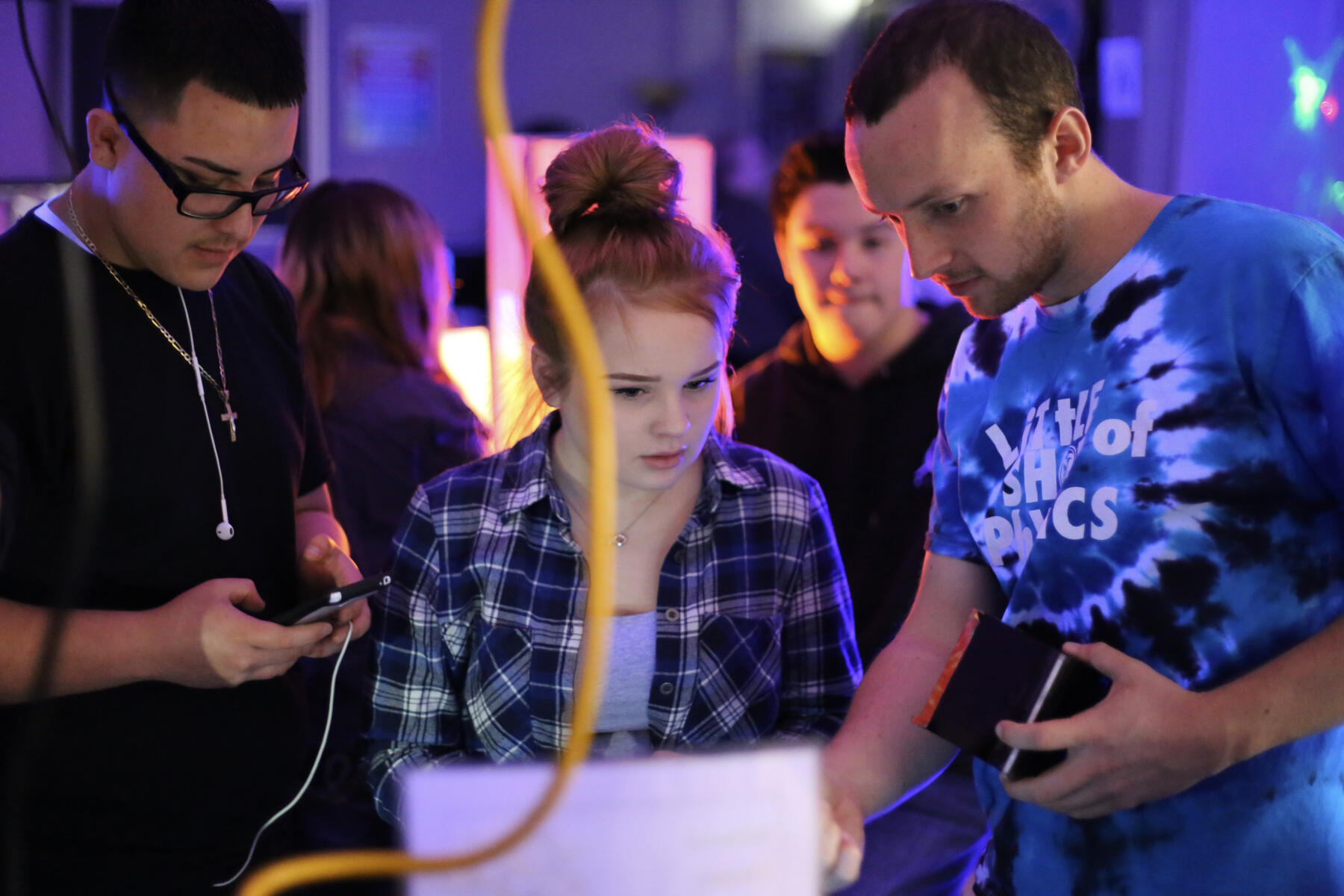
Little Shop of Physics
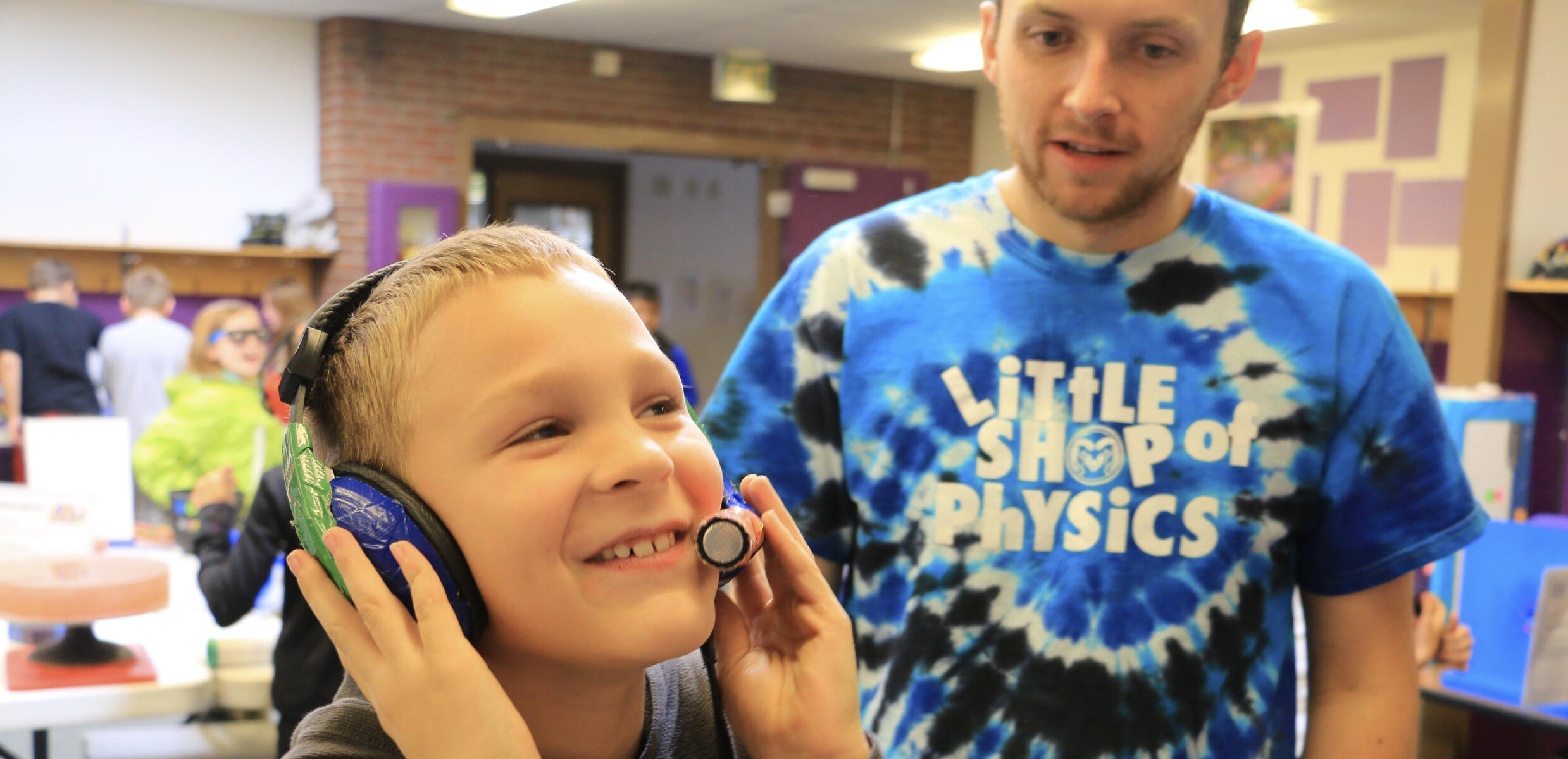
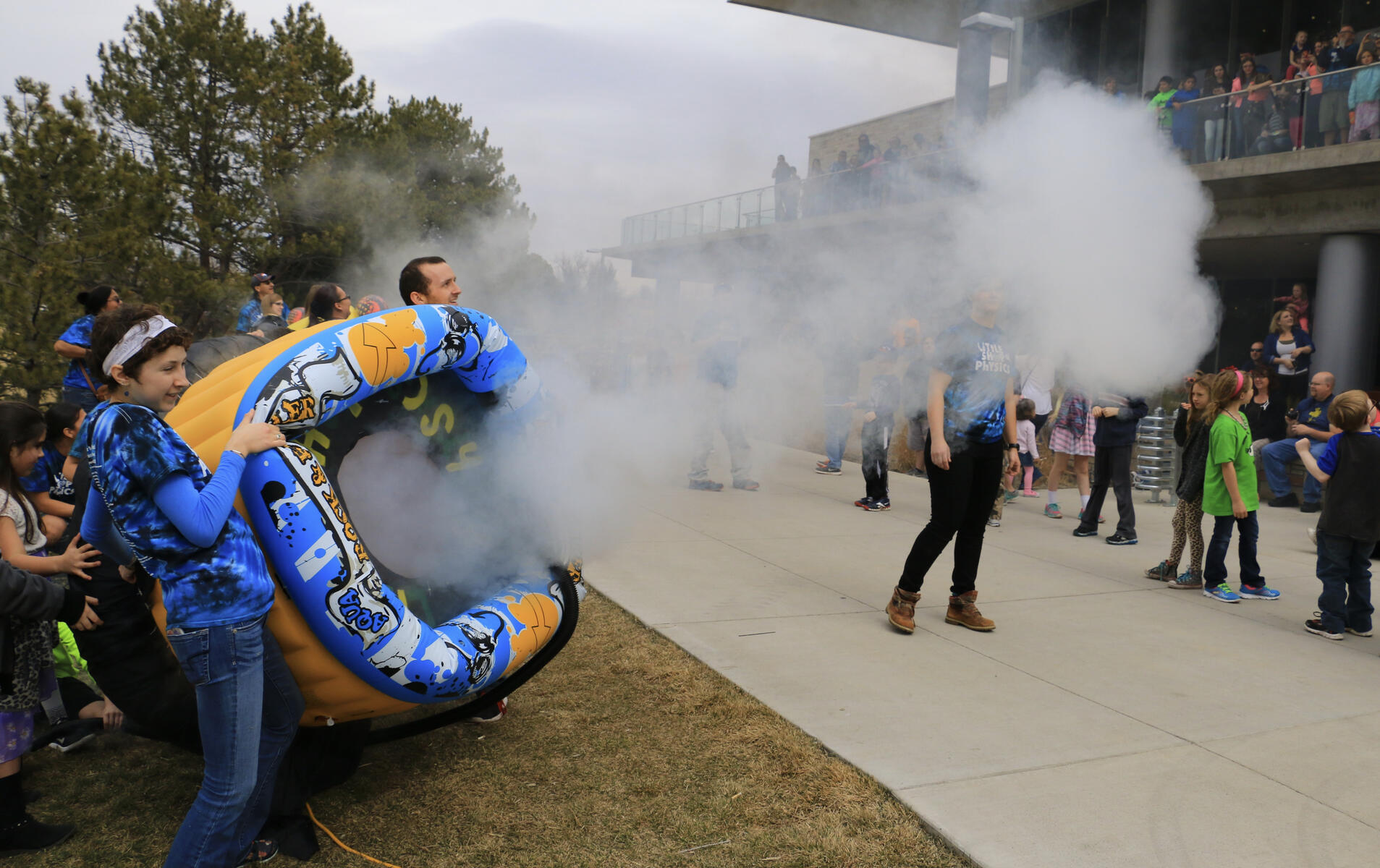
Colorado State University's Little Shop of Physics is a student-powered science and technology outreach program. Their goal is to ignite curiosity and inspire a love of science through hands-on experiences. Every week, interns pack a van full of science demonstrations and experiments, and take those experiences to schools around the community. In addition, Little Shop of Physics hosts annual events, highlighted by their Open House, CSU's largest academic event on campus. Each year, the Little Shop of Physics engages with tens of thousands of people.
Water Cube
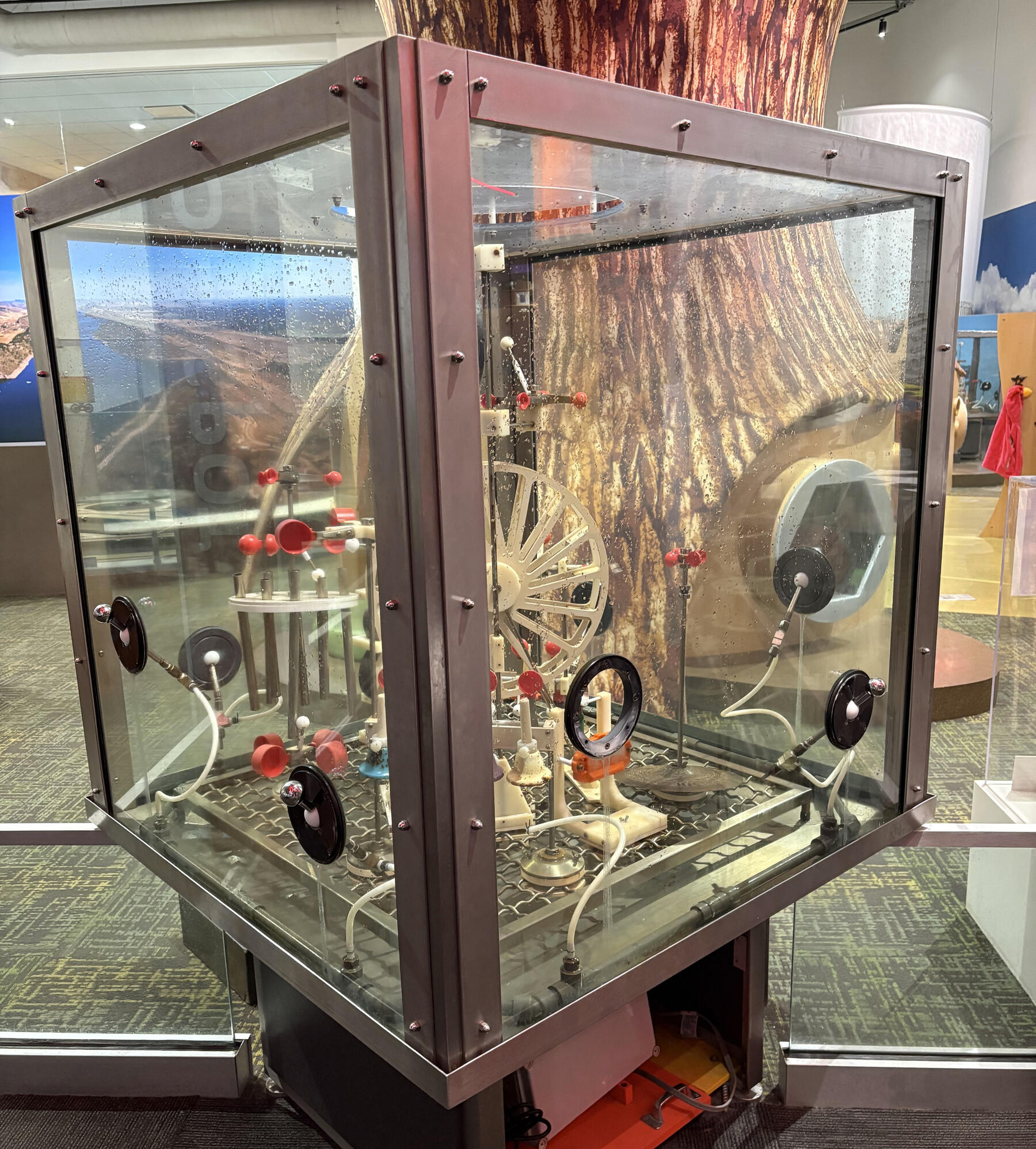
The Water Cube is an interactive exhibit with eight water jets that guests control with handles on the outside of a large glass cube. The water streams hit wheels, levers, and instruments to create motions and sounds.The cube is based on a similar exhibit from the Pacific Science Center in Seattle. It was installed at FCMoD when the museum opened in 2012. After over a decade of continuous, heavy use by museum guests, the exhibit was in need of repairs and upgrades.The most pressing issues that we needed to address were:
• Water pressure and cleanliness
• Nozzle reliability
• Water leakage
• Adding a sound system
Match that Tone
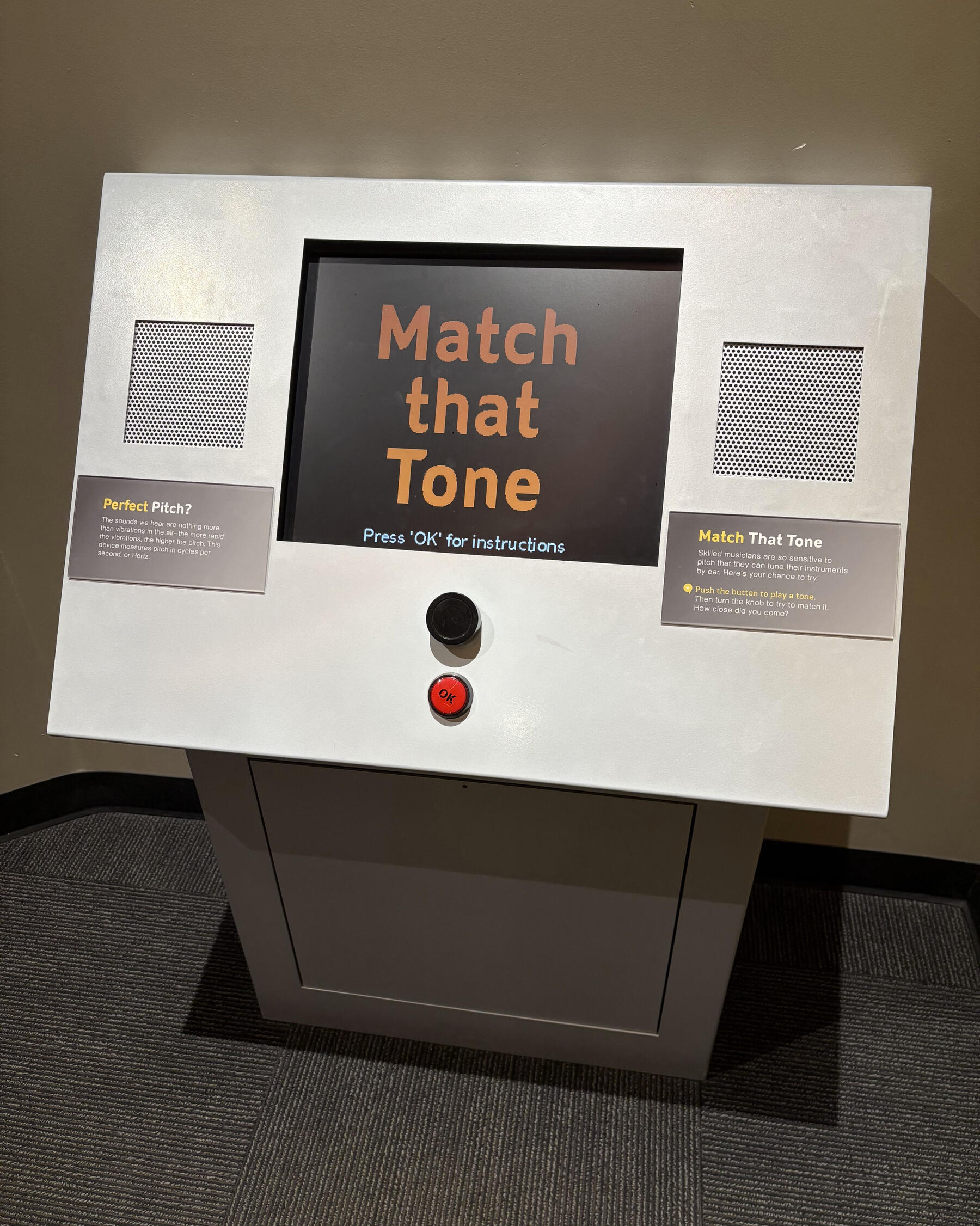
Match That Tone gives guests the opportunity to test their audio pitch recognition. A target pitch is played for a short duration, then the guest uses a dial to try to match that pitch.The goal of this exhibit revamp, which is currently underway, is to update and modernize the interface, as well as to add features to improve guest engagement.Some of our ideas include:
• Updated graphics
• Ability to identify chords/octaves/etc.
• Gamify certain elementsThis page will be updated as the project progresses.
Pump and Filter
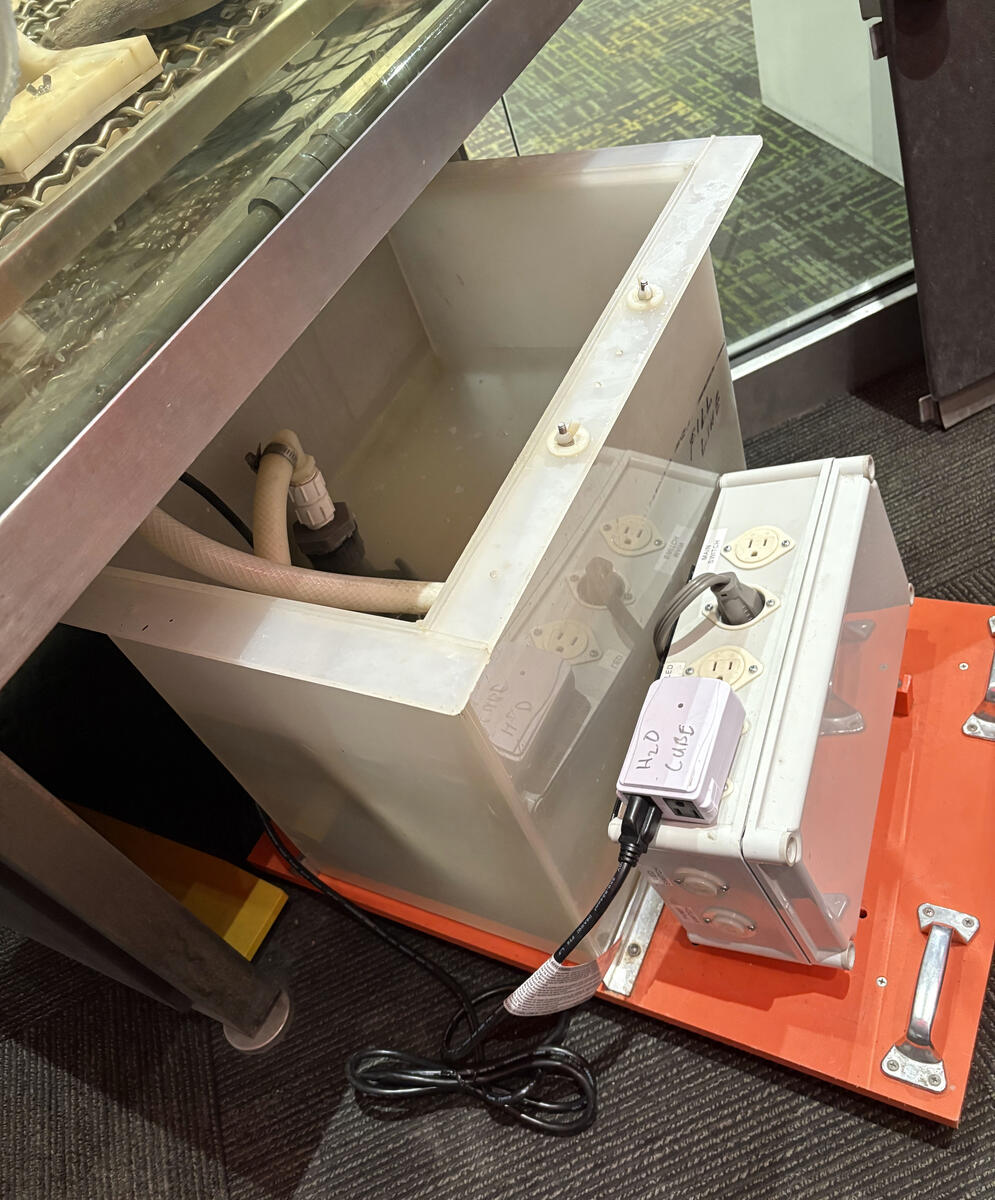
The major concerns with the pump and filter were the water pressure and cleanliness. To address these problems:
• Mark and I conducted flow tests that confirmed that the pump and reservoir system are appropriately sized.
• We rerouted some of the tubing to alleviate concerns for pinch points.
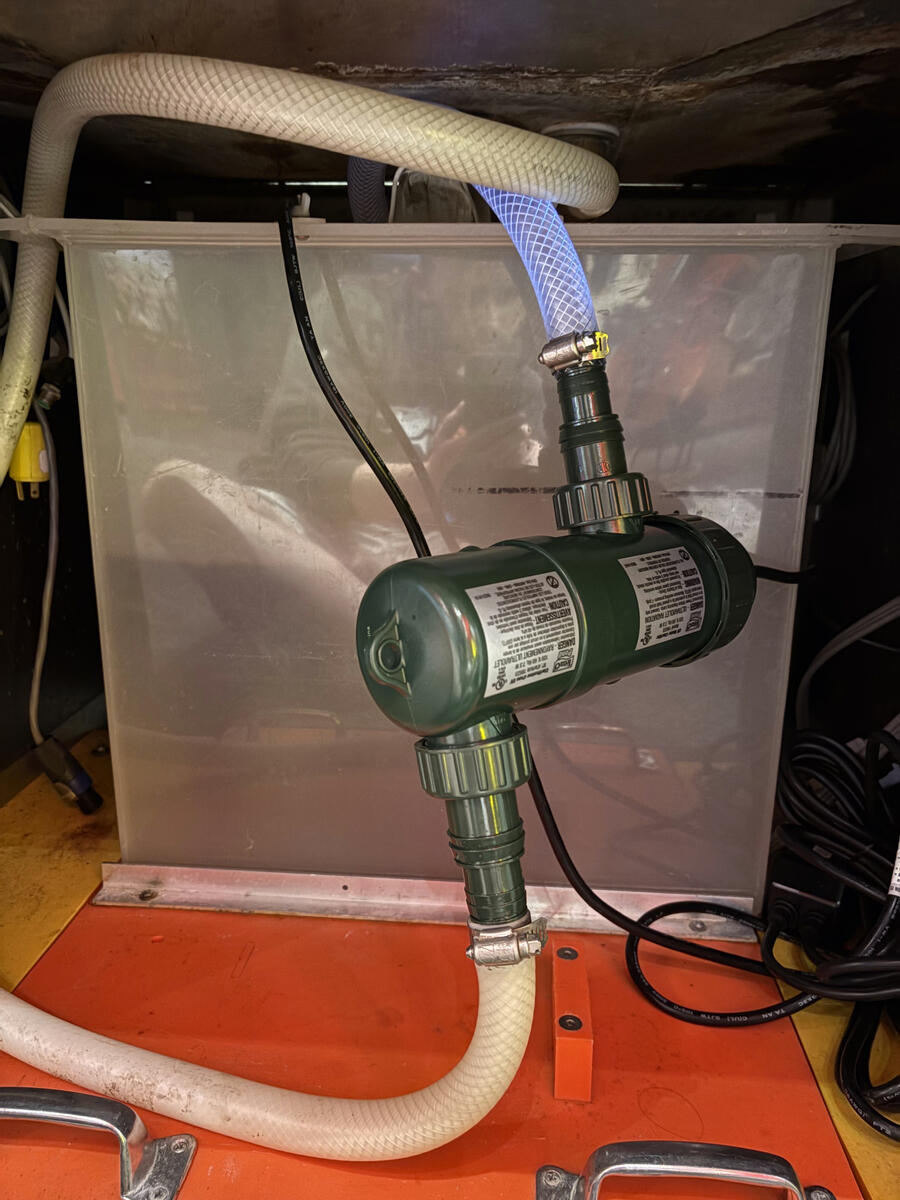
• We selected an ultraviolet pond filter to replace a previously broken filter.
• I installed the filter in-line with the pump.Within one week after install, the staff member who cleans the tank reported that the water clarity was already much better.

Pump and reservoir system

UV Filter
Nozzles and Leakage
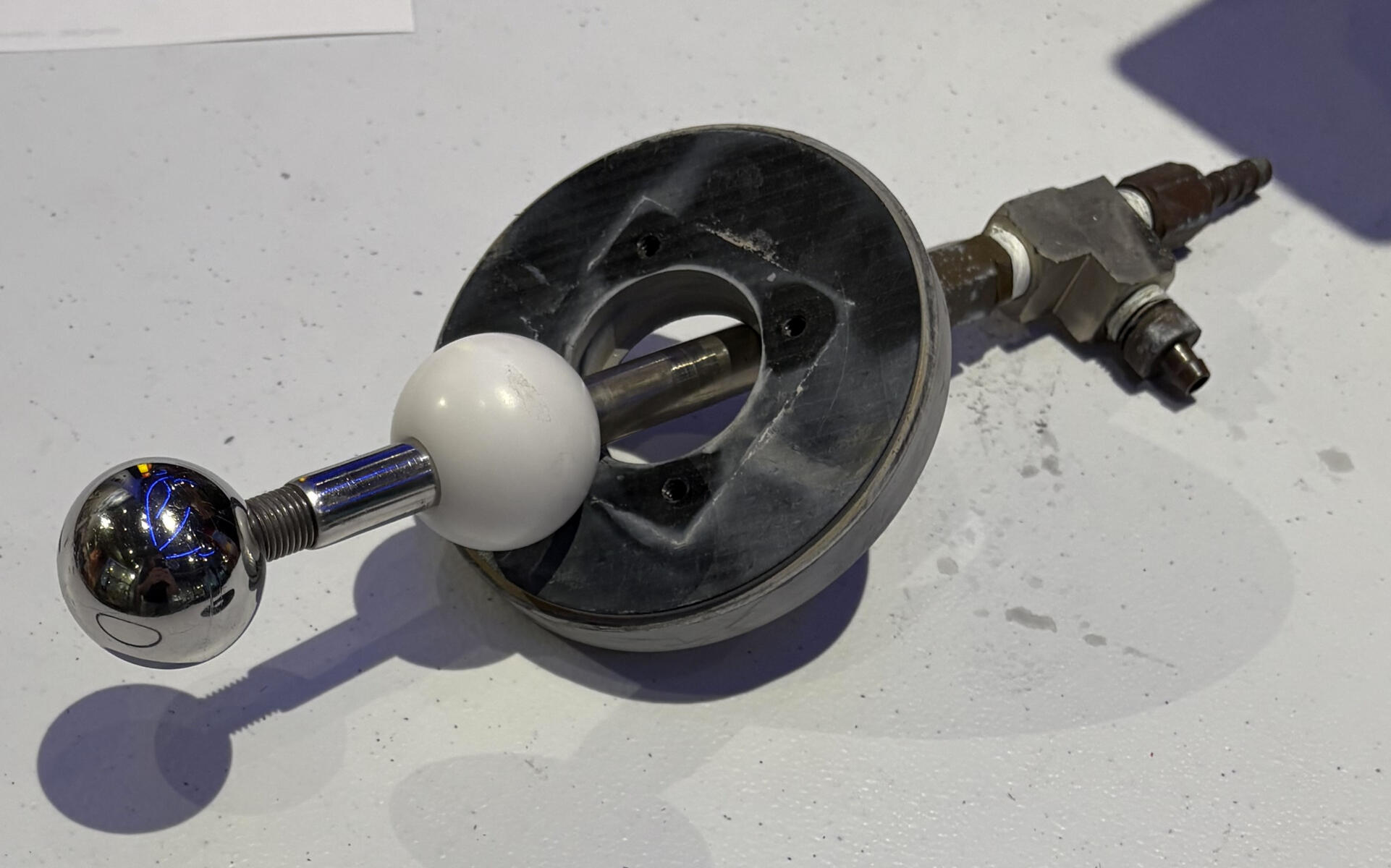
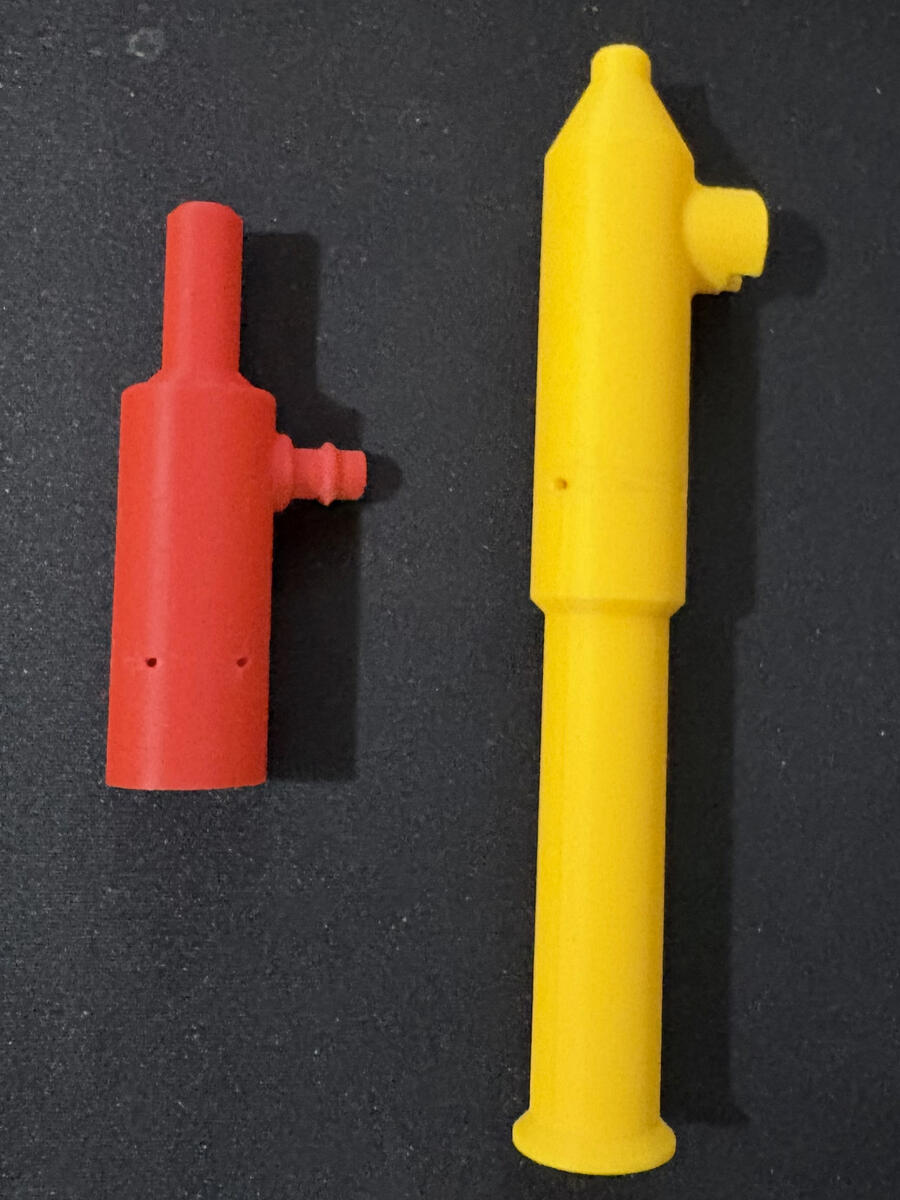
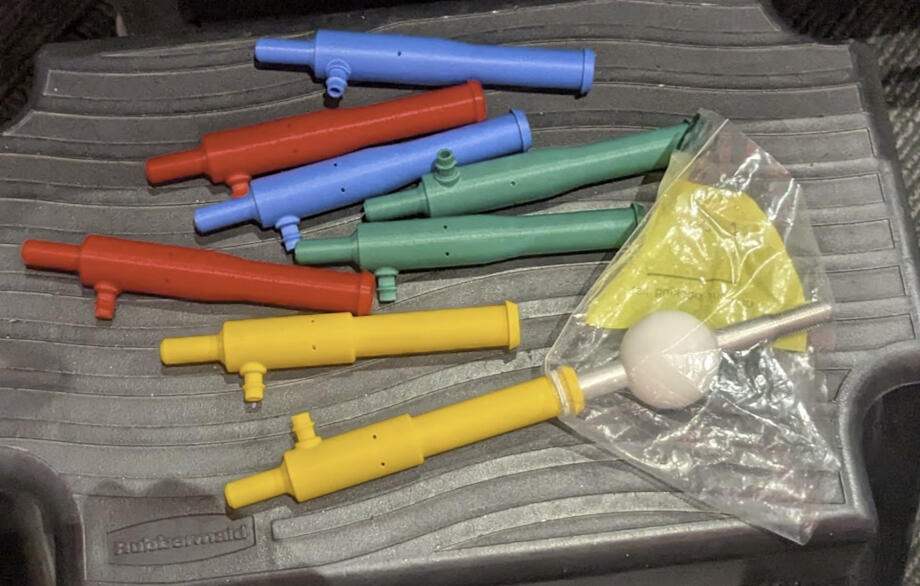
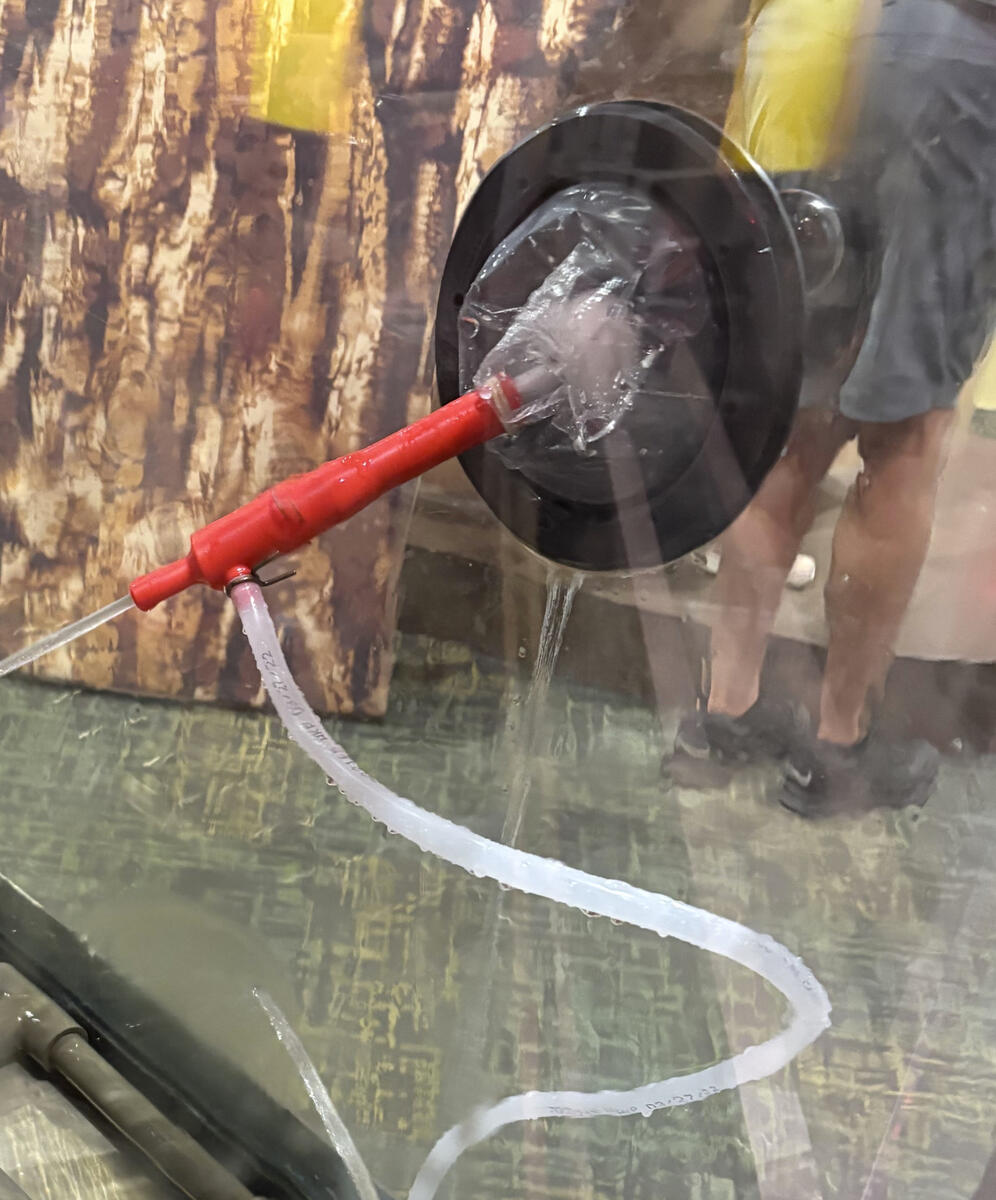
The original nozzles were composed of several metal pieces, and repeatedly fell apart over time. Our biggest goal for the nozzle redesign was to simplify them and minimize the number of parts needed. We decided that 3D printing the nozzles would be a good solution. I used Autodesk Fusion to design the nozzle, and used my 3D printer to rapidly iterate on several revisions to address water pressure, hose interface issues, and leakage considerations.One of the major problems we needed to address was that water could easily leak through the holes where the handles pass through the cube. Water-proofing a ball joint is a difficult task, especially given the need for the user to easily maneuver the handle without much friction. To remedy this, we decided to incorporate a plastic "boot" to shield the ball joint.

Original Nozzle Assembly

Two iterations of new design

Boot installed on one of the nozzles

Nozzle and boot installed in cube
Sound System
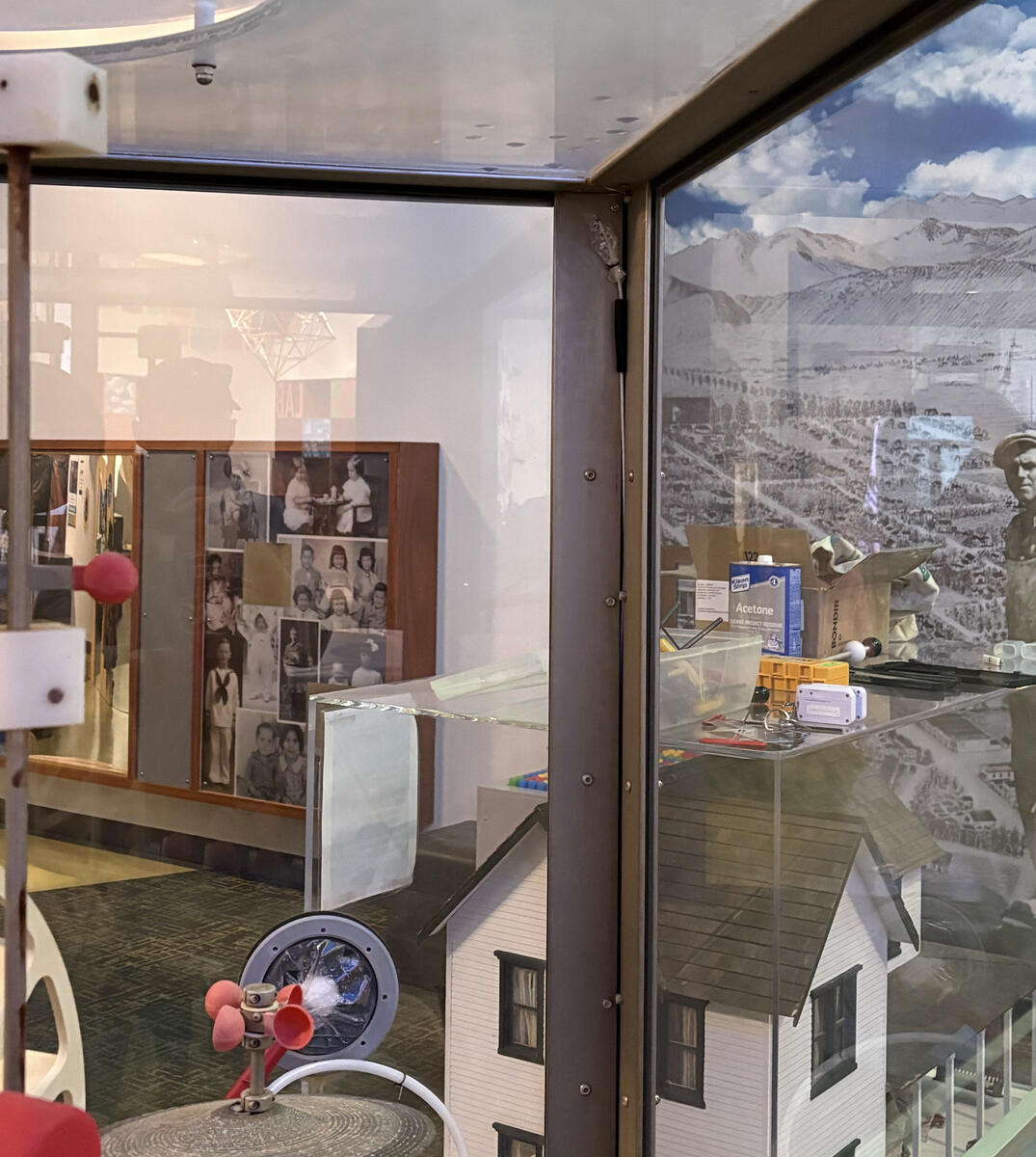
The Water Cube incorporates many interactive musical elements. Without amplification, most of the sounds are difficult or impossible to hear through the glass panes and in a busy museum setting. To remedy this, we:• Placed a microphone in one corner of the cube.
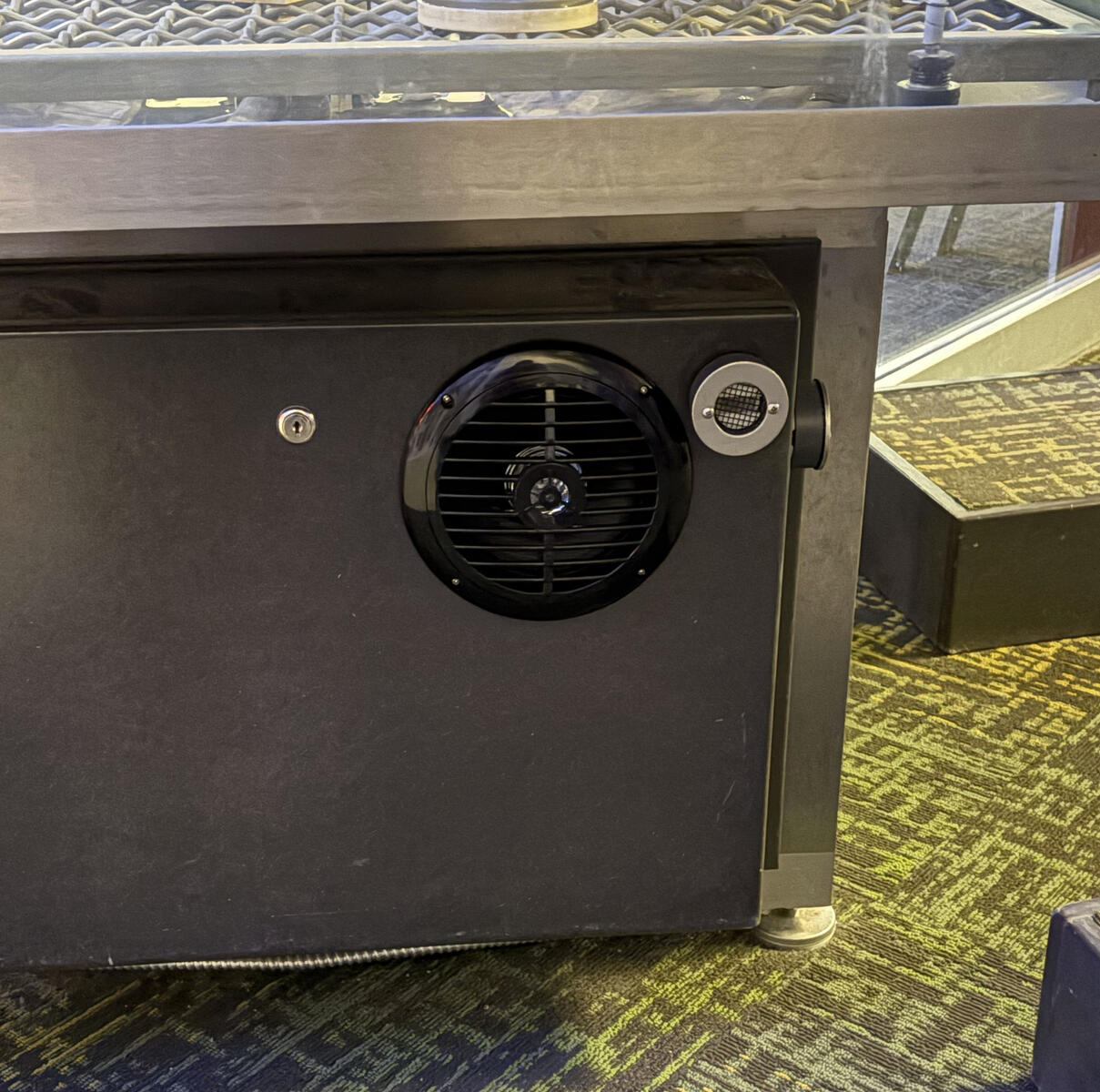
• Added speakers on both sides of the cabinet.
• Incorporated a high-pass filter to remove most of the pump and water stream background hums.

Microphone installed in the corner

Speakers installed in cabinet
Little Shop of Physics Internship
How Projects Were Developed
• Our director brought in ideas that ranged from nearly complete concepts that only needed fabrication to very rough ideas built around a general physics principle.
• Interns were free to explore these ideas, sketch possible approaches, build quick prototypes, and iterate until we produced a reliable demo that could survive travel and repeated student interaction.My Favorite Project
My favorite project I built is called Color Confusion, which shows how different colors of light change the perceived colors of objects.• I started with a color changing LED panel and the challenge of illustrating color perception.
• I designed and constructed a viewing box with the panel mounted overhead.
• I filled the box with brightly colored fabrics, toys, and objects for visitors to experiment with.
• Switching between red, green, and blue light let visitors watch objects appear vivid, muted, or nearly disappear depending on the light.Why It Stood Out
This project is hands on, intuitive to use, and visually striking, while presenting a rather counterintuitive physics phenomenon. It gave students a clear way to experience how light and color interact.